
Mold Inspection in DeSoto, TX: What to Do and Who to Call
A mold inspection in DeSoto, TX looks for mold and for the water feeding it. DeSoto Mold Help is a free referral service, not a mold inspection company. Call [PHONE NUMBER] and we connect you with an independent local provider.
Each provider sets its own prices, availability and terms. This site does not.
Quick Answers
- Anyone paid to assess mold in Texas needs a TDLR license, and must show credentials when you ask.
- The inspector and the cleanup company must be separate on the same project.
- The EPA says that when mold is visible, sampling is usually unnecessary.
- An inspection finds mold and moisture. It does not clean up mold or fix leaks.
- This page is not medical advice. Ask your doctor about health.
How Getting Connected Works
DeSoto Mold Help does not inspect homes. We connect you with an independent local provider, then step back. It takes three steps:
Call or Send the Form
Tell us what you see or smell, which room it is in and when water last got in. Photos help. Say whether you own or rent.
We Pass It On
Your request goes to an independent local provider. Ask for an inspection only, since Texas keeps inspection and cleanup as separate companies.
The Provider Takes Over
The provider handles the visit, the report and the price. Check the license before you agree to anything.
Is It Really Mold? What a Mold Inspection Can and Cannot Tell You
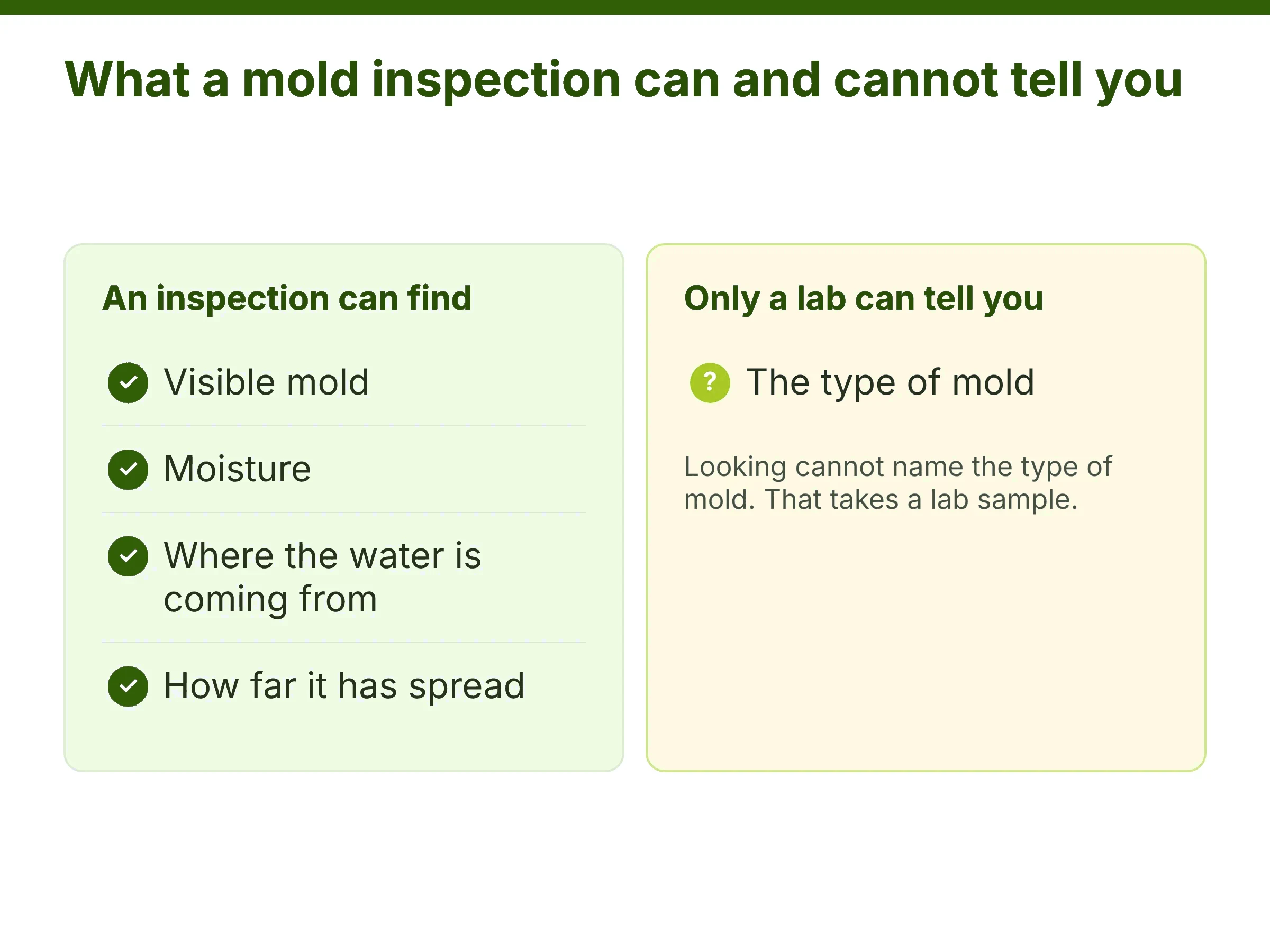
Not always, and you cannot tell by sight alone. Dust and soot, old water stains and white mineral crust on brick or concrete can all pass for mold, while mold inside a wall shows nothing at all.
What does mold smell like?
Most people describe a musty, earthy smell that comes back after cleaning. The EPA and NIOSH both list musty odors as a sign to look for moisture. NIOSH says a careful visual check and your nose are more reliable than air sampling.
Where hidden mold hides
- Behind drywall and paneling, and on the back side of wallpaper.
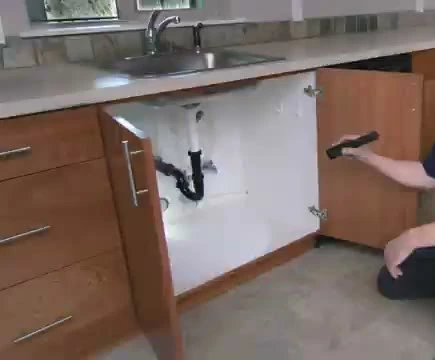
- Under carpet and padding, and under sink cabinets.
- Above ceiling tiles, in attics and around AC equipment.
- Around pipes inside walls, where a slow leak can run for months.
The EPA warns that peeling wallpaper with mold growing on its underside can release a large burst of spores. Leave it alone and call a licensed assessor.
Is Mold Dangerous, and Can You Stay in the House?
Heavy indoor mold can bother some people, especially anyone with asthma, allergies or a weak immune system. No website can tell you what mold is doing to your body, and NIOSH notes there are no health based standards for mold in indoor air. That is a question for your doctor. The house is a question for a licensed assessor.
- Keep children, older adults and anyone with breathing trouble out of the affected room.
- Skip the AC if mold may be inside it. The EPA says a contaminated system can spread mold through the building.
- Do not scrub, sand or tear out a large patch while you wait. Disturbing it can spread spores.
- See your doctor about symptoms, and tell them where you think mold is.
Why Mold Shows Up in DeSoto Homes
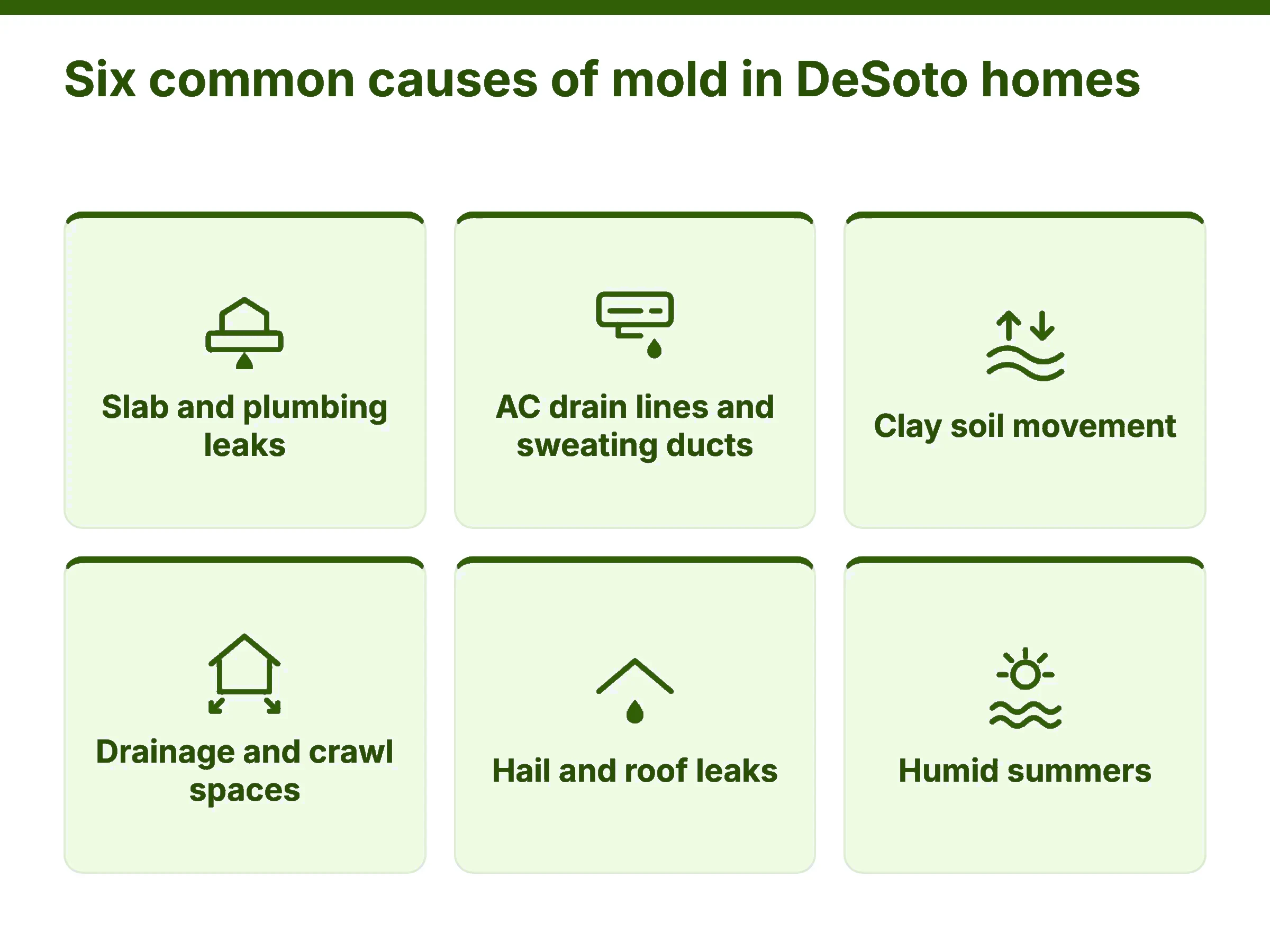
Mold needs two things: moisture and something to eat, like drywall, wood or carpet. North Texas gives homes plenty of moisture. The National Weather Service says thunderstorms and severe weather peak in spring, that large hail, damaging winds and flooding hit the Dallas and Fort Worth area nearly every year, and that Gulf moisture keeps summers humid, with highs in the 90s and often over 100. Here is how that turns into wet walls:
Where this applies in DeSoto
DeSoto is a Dallas County city of about 56,000 people (56,145 in the 2020 census) in the Best Southwest area with Cedar Hill, Duncanville and Lancaster. Most of it falls in DeSoto ISD. Whether your house is near DeSoto Town Center, along Pleasant Run Road, close to the Paul S. Dryer Preserve at Windmill Hill, or anywhere in ZIP codes 75115 and 75123, the same weather and the same soil apply. A wet wall behaves the same way on every street.
Can You Inspect for Mold Yourself in Texas?
Yes, as a first look. TDLR says a homeowner can take samples for mold or clean it up in their own home without a license. Paying someone to assess mold is different, and that person must be licensed. The size guide below comes from the EPA and the Texas cleanup rules. It helps you judge the problem and is not a rule for who may inspect.
| Size of the patch | Rule or guidance | What makes sense |
|---|---|---|
| Under about 10 sq ft | EPA: most people can handle cleanup | Find and fix the water, then clean hard surfaces |
| 10 to under 25 sq ft | TDLR: people who are not licensed may clean visible mold under 25 contiguous sq ft | Think twice, especially on drywall or when someone at home is sensitive |
| 25 sq ft or more, or mold you cannot find | Hired cleanup needs a TDLR licensed remediator | Call a licensed assessor first |
If you check on your own
- Hold a bright flashlight at a low angle along walls and ceilings.
- Look under sinks, around windows, in closets and near AC vents.
- Read the humidity with a meter. Aim for 30 to 50 percent.
- Wear an N95 respirator, gloves and goggles if you touch moldy material.
- Never dry scrape, dry brush or sand mold. It can release spores.
Two myths that waste money
A test kit settles it. The EPA says sampling should be done by professionals with specific experience, and a kit cannot show where the moisture is coming from. Paint fixes it. Painting over mold hides it and leaves the moisture problem in place.
What Texas Law Says
The Texas Department of Licensing and Regulation (TDLR) runs the mold program under Chapter 1958 of the Occupations Code. TDLR took over the program on November 1, 2017. These are the parts that affect you:
- Assessors are licensed. Any individual or company providing mold assessment in Texas must hold a license, as a mold assessment technician, consultant or company. Labs that analyze samples must be licensed too.
- Two jobs, two companies. A license holder may not do mold assessment and mold remediation on the same project, and no one may own part of both on that project. TDLR says the rule exists to prevent conflicts of interest. The only exception is a license holder working for a school district on that district’s project.
- Written protocol. A licensed mold assessment consultant writes the protocol that cleanup follows, including what results will count as acceptable.
- Clearance. After cleanup, the consultant does a post remediation assessment and gives you a passed clearance report. There is no national or state standard for a “safe” level of mold.
- Credentials on request. TDLR reminds licensees that they must present their credentials when asked. Ask.
- Home inspectors. A real estate inspector may note visible mold but needs a mold assessment license to collect air or spore samples.
- Selling a home. The license holder gives the owner a certificate of mold remediation within 10 days of finishing. A seller must give the buyer a copy of each certificate issued in the five years before the sale.
A recent change: Senate Bill 1255 took effect September 1, 2025. It removed mycotoxins from the legal definition of mold, excluded demolition after a fire or disaster, and repealed an exemption that let unlicensed employees work under a license holder. TDLR says current rules stay in effect until it adopts new ones, so check its site for updates.
Check any license on the TDLR license search. The TDLR mold FAQ explains the rules in plain language. You may see ads for certified inspectors. In Texas, the phrase to look for is licensed by TDLR.
| Who | May do | May not do |
|---|---|---|
| Licensed assessor | Inspect, sample, write the protocol, judge clearance | Clean up mold on the same project |
| Licensed remediator | Clean up mold by the protocol | Assess the same project |
| Licensed lab | Analyze samples | Advise on cleanup |
| Home inspector | Note visible mold | Collect air or spore samples without a mold license |
| Homeowner | Sample or clean their own home | Assess other people’s homes for pay without a license |
How a Professional Mold Inspection Works
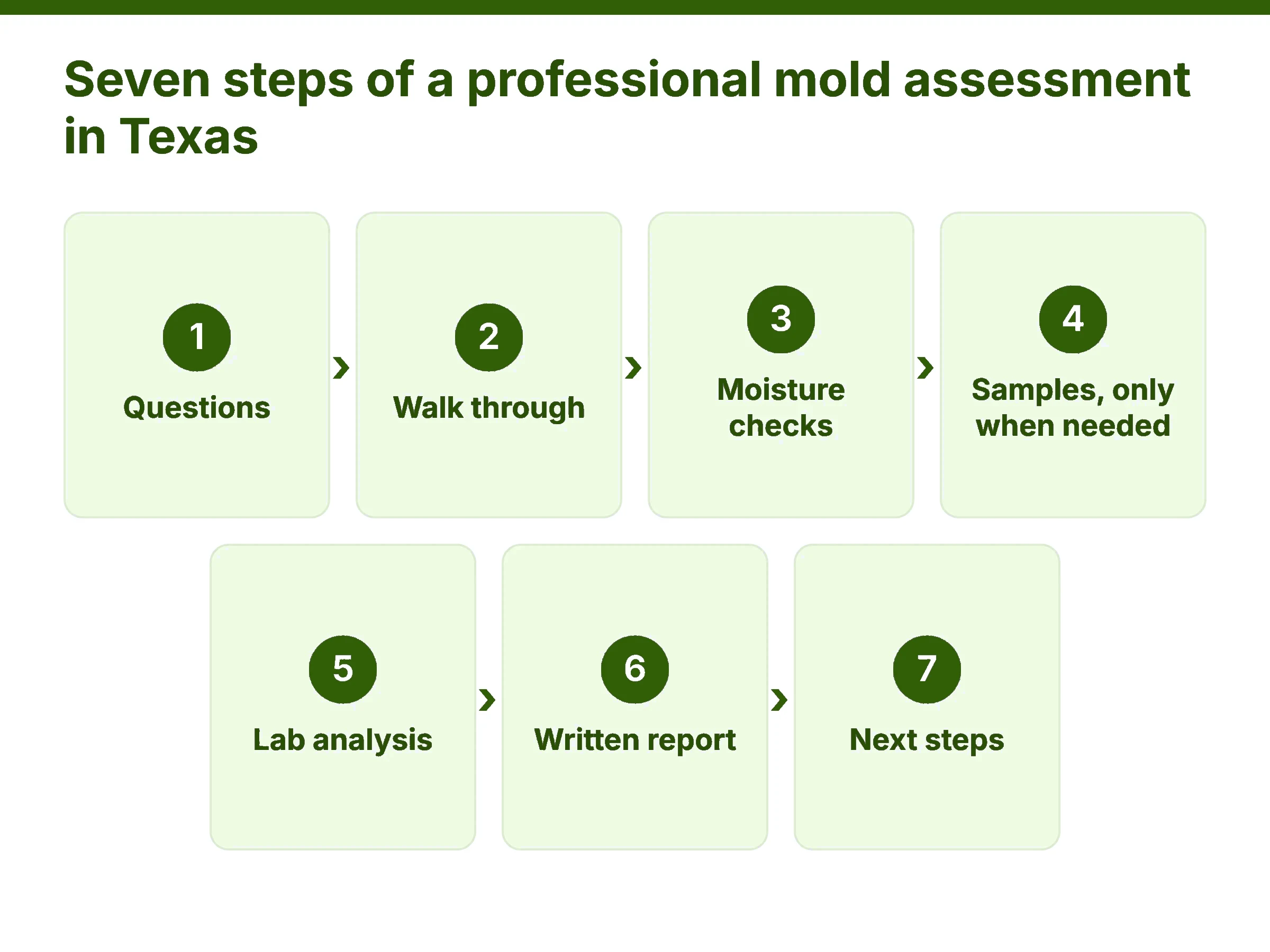
Steps vary by provider and by home. A residential visit usually runs in this order:
How do you prepare for a mold inspection?
- Write down when and where water got in, and any past repairs.
- Take photos of stains, smells and damage before anything changes.
- Clear access to the attic, closets and under sinks.
- Do not clean, paint or tear out the area first. It hides what the assessor needs to see.
What a good report includes
You should get written findings, photos, moisture readings and, if cleanup is needed, a protocol that works like a road map for the remediator. A protocol with clear scope keeps the cleanup job from turning into guesswork.
Scope stops at the report. An inspector does not remove mold, repair a leak or rebuild a wall. See our mold remediation page for the cleanup side.
Mold Inspection vs Mold Testing
An inspection looks at the home and finds the problem. Testing collects samples for a lab. Searching for mold inspection near me? Ask each provider which one you are getting, and who explains the results. Our mold testing page covers samples in detail.
| General Home Inspection | Licensed Mold Assessor | Mold Testing | |
|---|---|---|---|
| Goal | Overall condition of the home | Find mold, moisture and spread | Lab data on a sample |
| Mold samples | Not without a mold license | Only when needed, by a licensed assessor | The whole point |
| Moisture tools | Varies | Meters, humidity gauge, sometimes thermal camera | Not the focus |
| Report | Notes visible mold | Findings, photos and a protocol if needed | Lab results with explanation |
| Cleanup | Not included | A separate licensed company | A separate licensed company |
What It Costs and Whether Insurance Pays
Providers set the price, and this site does not publish it. Quotes are not all alike, so compare what each one covers. These things move the price:
| Size of the home | More rooms and more square footage take more time |
|---|---|
| Number of samples | Each air, swab or tape sample adds to the job |
| Lab analysis | Some quotes include it, others bill it separately |
| Access | Tight attics and crawl spaces take longer |
| AC system | Checking the unit and ducts may be an add on |
| Report | Photos, moisture readings and a protocol may be priced differently |
Ask every provider for
- A written quote that says what is included.
- Whether lab fees and thermal imaging are in the quote.
- A sample report, so you know what you will receive.
Who pays for a mold inspection?
Whoever hires the assessor pays the provider. For renters, who pays depends on your lease and your talks with the landlord, so ask before you book. Insurance rarely pays on its own, as the next part explains.
Does insurance cover it?
The Texas Department of Insurance says mold that develops on an item damaged by a covered event, such as a sudden and accidental water loss, would be covered. Most home policies do not cover gradual leaks, and most do not include mold cleanup and testing after a damaged item is removed. Your insurer may let you add that coverage. TDI also says to make sure the mold professional holds a state license. Call your insurer before work starts and keep every report.
Why Use DeSoto Mold Help
You can call a licensed assessor directly, and that is fine. Here is what starting here gives you:
Free to You
The referral costs you nothing. Providers set their own prices, and this site does not add to them or publish them.
No Inspection Work to Sell
We do not inspect or clean anything, so we have no reason to push you toward a bigger job.
State Rules First
You see what Texas requires before you talk to anyone: the license, the separate cleanup company and the protocol.
One Call for a Local Match
You tell us what you see once, and a local provider contacts you.
Plain Answers Before You Commit
This page covers costs, insurance, DIY limits and the questions to ask, so you can judge a quote yourself.
Providers are independent businesses. This site does not guarantee their work, so check each license with TDLR yourself.
Who to Call for a Mold Inspection in DeSoto, TX
Start with a licensed Texas mold assessor who will not also clean up your project. If you want help finding one, call [PHONE NUMBER]. We are a referral service, so we connect you and step back. The provider handles the visit, the report and the pricing.
Looking for mold inspection services near me? Calls go to independent providers serving DeSoto and the Best Southwest, including Cedar Hill, Duncanville and Lancaster, plus [CONFIRM AREAS WITH LEAD SMART]. Whoever you pick, ask these five things first:
- What is your TDLR license number, and can I check it?
- Do you or your company also clean up mold? (On your project, the answer must be no.)
- Which licensed lab analyzes samples, and is its fee in the quote?
- Will the report include photos, moisture readings and a cleanup protocol?
- Do you check the AC system and ducts, or is that extra?
A provider who cannot answer these clearly may not be following the Texas process. Ask someone else.
Buying or Selling a DeSoto Home With Possible Mold?
A home inspection is not a mold assessment. If stains or a musty smell show up before closing, a licensed assessor can say what it is and how far it spreads, so the deal does not run on guesses. Never paint over it. If you sell, keep every remediation certificate, since you must give the buyer copies of any issued in the previous five years. If you buy, ask for them.
Your Questions, Answered
How much does a mold inspection cost in DeSoto?
It depends on the size of the home, the number of rooms checked, how many samples are taken, whether lab fees are included and how hard the attic or crawl space is to reach. Each provider sets its own price, and this site does not publish prices. Ask for a written quote that lists exactly what it covers.
Does homeowners insurance cover a mold inspection?
Usually not on its own. The Texas Department of Insurance says most home policies do not include mold cleanup and testing after a damaged item is removed, and most do not cover gradual leaks. Mold that develops on an item damaged by a covered event, such as a sudden water loss, would be covered. Call your insurer before you book anyone.
Are mold inspections free?
The referral through this site is free. Whether the inspection itself is free is up to each provider, so ask what it includes and who benefits from the result. In Texas, a company that assesses mold may not do the cleanup on the same project, so be careful with any offer that ties an inspection to a cleanup job.
Can I inspect for mold myself?
You can look for signs, and Texas lets a homeowner take samples in their own home without a license. But you cannot see inside walls, and results are hard to read without a physical inspection of the area. Anyone paid to assess mold in Texas must be licensed.
Does a mold inspector need a license in Texas?
Yes. TDLR says any individual or company providing mold assessment in Texas must be licensed, as a mold assessment technician, consultant or company. A general real estate inspector needs a mold license to collect air or spore samples. You can check any license on the TDLR license search.
Is a mold inspection the same as mold testing?
No. An inspection looks at the home for mold, moisture and how far it has spread. Testing collects samples and sends them to a lab. Many inspections include some sampling and some do not, so ask what your quote covers.
Do I need an inspection if I can already see mold?
Often yes, but not for a lab test. The EPA says sampling is usually unnecessary when mold is visible. An inspector earns the fee by finding the water source, checking for hidden growth and writing the scope for cleanup.
Will a home inspector find mold?
Only what is visible. A general home inspector may note stains or a musty smell, but moisture mapping, sampling and a written protocol come from a licensed mold assessor. If a home inspector flags a problem, ask an assessor to look closer before closing.
Is mold dangerous, and can I stay in the house?
Heavy indoor mold can bother people with asthma, allergies or weak immune systems. Keep them out of the affected room, skip the AC if mold may be inside it, and ask your doctor about symptoms. A website cannot tell you what mold is doing to your health.
How long does a mold inspection take?
It depends on the size of the home, how many areas are checked and whether samples are taken. A one room visit takes less time than a whole house visit, and lab results come back later. Ask the provider for a written estimate of both the visit and the report.
What if the inspector finds nothing?
That is good news, but it is not a promise. Hidden moisture can sit behind walls or under floors, and mold can grow when water returns. Fix any leak, dry wet materials quickly and keep indoor humidity below 60 percent, ideally between 30 and 50.
What should I ask a mold inspector before I hire one?
Ask for the TDLR license number, whether the company also does cleanup, which licensed lab it uses, how many samples it plans and why, and whether the report includes photos, moisture readings and a cleanup protocol. Also ask whether the visit covers the whole house or one room, and whether the AC system is included.
Who should I call for a mold inspection in DeSoto?
Call a licensed Texas mold assessor and check the license on the TDLR site first. Pick one who will not also clean up your project. If you want help finding one, we connect you for free. We are a referral service, not an inspection company.
Get Connected With a DeSoto Mold Inspector
Call [PHONE NUMBER] or send the form. Tell us what you see or smell, and when water last got in. Your request is shared with independent local providers so one can contact you.