
Home › Services › Bathroom Mold Removal
Bathroom Mold Removal in DeSoto, TX: Quick Answers
- Stays or goes: Porous bath materials that hold mold deep inside, like soaked drywall, particleboard vanity backs and crumbling grout, usually get removed. Hard surfaces like tile, tubs and glass can usually be cleaned and kept.
- What it is: Bathroom mold removal is controlled cleaning and removal of moldy bathroom materials in a contained area, with the moisture source fixed so it does not return.
- Cost drivers: Bathroom mold removal cost depends on how far the mold and water have spread behind tile and walls, not just the spot you can see.
- Cost range: National data puts mold remediation at $1,100 to $3,300 on average. This site does not set prices; your provider quotes your job.
- Texas rule: Texas requires a license for mold remediation over 25 square feet. This site connects you with providers; it is not a mold company.
Bathroom Mold Removal in DeSoto, TX: What to Do and Who to Call
Small spots of mold on bathroom grout or caulk are common in DeSoto homes, and some can be cleaned safely by the homeowner. The problem starts when mold keeps coming back in the same place, spreads across the ceiling or walls, or shows up alongside soft drywall, peeling paint or a musty smell that never leaves. Those are signs water is getting in behind the surface, where a spray bottle cannot reach. This page explains how to tell a surface cleaning job from one that needs controlled removal, what a professional job involves under Texas rules, and who to call when you want a licensed provider to look at it.
Is It Really Mold in Your Bathroom?
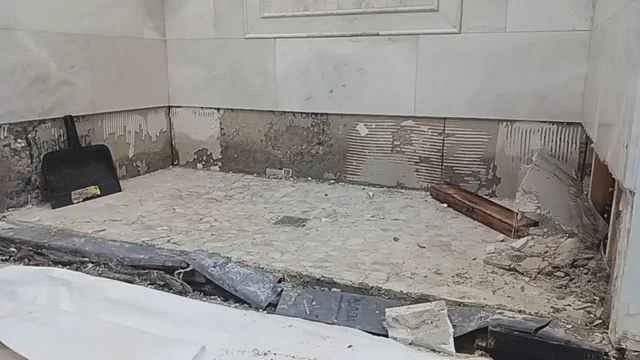
Mold in a bathroom usually looks like dark spots or patches along grout lines, caulk joints, shower corners, ceilings and the wall around the tub or toilet. It can also be pink, orange or green. Most bathroom mold starts on the surface of tile and grout, where soap film and standing water feed it.
Not every dark stain is mold. Soap scum, hard water deposits and mildew colored grime can look similar, and dark grout is sometimes just old grout. A stain that wipes away completely and does not return is usually surface grime. Mold behaves differently: it sits in the grout and caulk themselves, spreads slowly across joints, and returns in the same pattern after cleaning because its roots stay in the porous material.
When the question is whether mold is also growing where you cannot see it, like inside the wall behind the tile, a visual check from the bathroom side only goes so far. The Mold Inspection page explains how a licensed assessor checks for hidden mold and moisture. If samples are needed to identify what is growing, the Mold Testing page explains surface and air sampling and what a lab report tells you. This page stays with what you can see and what to do about it.
Signs You Need a Professional
Some bathroom mold problems are bigger than the spot you can see. These signs point to a job that needs controlled professional removal rather than another round of scrubbing.
The mold keeps coming back in the same spot
If you clean a shower corner or ceiling spot and the same pattern returns within days or weeks, the growth is not just on the surface. Mold is feeding on moisture inside the grout, the caulk or the wall material behind it. Repeated cleaning treats what you can see, while the colony inside keeps reseeding the surface.
Soft, swollen or crumbling materials
Drywall that feels soft or spongy near the tub or shower, baseboards that swell or pull away, and grout that crumbles when touched all mean water has been inside the material for a while. Porous materials that are soaked through cannot be dried and cleaned reliably, so they are removed and replaced as part of the job.
The area is bigger than a small patch
The U.S. Environmental Protection Agency says you can usually handle mold cleanup yourself if the moldy area is less than about 10 square feet, roughly a 3 foot by 3 foot patch. Bigger than that, the EPA suggests hiring a contractor. Texas adds its own rule: remediation work over 25 square feet needs a licensed mold remediation company working from a protocol written by a licensed mold assessment consultant. That rule is explained in the Texas Law section lower on this page.
A musty smell with no visible mold
A bathroom that smells musty even after cleaning, with no mold you can find, often has growth inside a wall cavity, under a tub or inside a vanity where a slow leak has been feeding it. Finding that source is assessment work, and removing the affected material is remediation work. The two are kept separate under Texas law, as explained below.
Water damage is still active
If a supply line, drain or shower pan is still leaking, mold removal done today will be undone by next month. The leak has to be found and stopped, and wet material dried or removed, before the cleaning means anything. A provider may pause the mold work until the plumbing problem is fixed, because removing mold while water is still coming in wastes your money.
Why Mold Grows in Bathrooms in DeSoto Homes
DeSoto sits in the hot, humid part of North Texas, and bathrooms add their own moisture on top of that. Every shower fills the room with steam. If that steam has nowhere to go, it condenses on the coolest surfaces first: mirrors, ceilings, tile and the wall above the shower. Repeated condensation keeps grout and caulk damp for hours, which is all mold needs.
Exhaust fans are the main defense, and they fail in common ways. A fan that is undersized, clogged with dust, or vented into the attic instead of outside moves the moisture problem rather than solving it. A fan that gets switched off the moment you leave the room stops working while the walls are still wet; running it for 20 to 30 minutes after a shower is the usual guidance. A fan vented into the attic also feeds attic mold, which is why the Attic Mold Removal page covers that path in detail.
Slow leaks are the other big cause. A toilet wax ring that seeps, a shower valve that drips inside the wall, or a tub drain that leaks into the subfloor can keep materials wet for months with no visible sign on the surface. By the time paint bubbles or a baseboard swells, the inside of the wall may have been wet for a long time.
Materials matter too. Standard drywall and particleboard soak up water and hold it, which is why bathrooms built or remodeled with moisture resistant board and proper waterproofing behind tile fare better. Older DeSoto homes, many built in the 1980s and 1990s, often have standard drywall right up to the tub edge.

The National Weather Service office for Fort Worth counts about 43 inches of rain in an average year for the Dallas Fort Worth area, and humid Gulf air keeps outdoor humidity high for much of the year. That background moisture means a DeSoto bathroom that is not vented well starts at a disadvantage: surfaces dry slowly, and any small leak stays wet longer than it would in a dry climate.
How Professional Bathroom Mold Removal Works
Bathroom mold removal follows the same basic steps as other mold jobs, adjusted for a small room where plumbing and tile concentrate the damage. Here is the sequence a licensed Texas provider generally follows.
- 1
Containment and protection
The work area is sealed with plastic sheeting and the air is kept under negative pressure where the job needs it, so spores released during removal do not drift into the rest of the house.
- 2
Water source stopped
The leak or moisture path is found and fixed, or the job is sequenced so the source is stopped before cleaning begins. Removal without this step does not last.
- 3
Removal of moldy materials
Porous materials that cannot be cleaned, like moldy drywall, insulation and swollen particleboard, are cut out, bagged and taken out through the contained area.
- 4
Cleaning of kept surfaces
Tile, tubs, glass and framing that stay are HEPA vacuumed, wiped or scrubbed with detergent based cleaning, and treated as the protocol directs.
- 5
Drying
The opened wall cavity and remaining materials are dried to normal moisture levels, usually with air movers and dehumidifiers, before anything is closed back up.
- 6
Clearance and certificate
On jobs that need it, a licensed assessor who is not part of the remediation company checks the work and, if it passes, the owner receives a Certificate of Mold Damage Remediation.
- 7
Rebuild
Removed materials are replaced: new drywall or backer board, tile, grout, caulk and paint, so the bathroom is whole again.
Dangerous if Done Wrong
Scrubbing or sanding moldy drywall without containment spreads spores through the bathroom and into the hallway and bedrooms. The mold you can see is only part of the colony; disturbing it dry is the fastest way to move it around the house.
The other common mistake is sealing mold in. Painting over mold, re-caulking over a moldy joint, or closing a wall while the inside is still wet hides the problem without stopping it. The growth continues inside, and the next discovery is usually worse. The Black Mold Removal page covers what to do when the growth is dark, extensive or has been disturbed already.
What Texas Law Says About Mold Removal
The Texas Department of Licensing and Regulation (TDLR) licenses mold workers under Texas Occupations Code Chapter 1958 and 16 Texas Administrative Code Chapter 78. The same license holder cannot do both the assessment and the remediation on one project, so the person who writes your protocol is not the company that does the cleaning. A remediator cleans and removes. Texas keeps those jobs separate on one project.
- Remediation of 25 contiguous square feet or more needs a licensed remediator. Under that, no license is needed.
- Owners of residential property with fewer than 10 dwelling units can do their own mold work. This does not cover anyone hired to work for the public.
- TDLR says a licensed remediator needs a written work plan on every project, regardless of size.
- A certificate of mold damage remediation goes to the owner after a licensed project.
Check any license on the TDLR license search. See the TDLR mold program page.
How Professional Bathroom Mold Removal Works
- Find the moisture source.
- Make a written plan. Licensed work follows one.
- Seal off the room. For 25 contiguous square feet or more, the plan must call for this containment.
- Remove what cannot be cleaned, such as wet drywall or ceiling board.
- Clean hard surfaces with a HEPA vacuum and damp wiping.
- Dry the space.
- Check the work. Licensed projects end with a certificate.
What if the mold is behind the tile or shower wall?
Tile and board may need to be opened. The EPA says to consider an experienced professional for hidden mold.
Where does the work stop?
Fixing a leak, fan or tile is separate trade work. Ask who handles each part.
Bathroom Mold Removal Near Me: Cleaning vs Licensed Remediation
Check the license before the price.
| Basic cleaning | Licensed remediation | |
|---|---|---|
| Size | Small patch, hard surfaces | 25 contiguous sq ft or more, or hidden mold |
| Who | Homeowner or handyman | TDLR licensed remediator |
| Plan and paper | None required | Written plan, certificate |
What Does Bathroom Mold Removal Cost, and Does Insurance Pay?
It depends, and each independent provider sets its own price.
| Cost driver | Why it matters |
|---|---|
| Affected area | More surface, more work |
| Materials | Tile, drywall and ceiling board differ |
| Cause and rebuild | Plumbing, fan, tile and paint repairs |
Ask every provider for: a written, itemized scope, the work plan, the license number, what is not included, and how the cause will be handled.
Does homeowners insurance cover mold from a bathroom leak?
Maybe. The Texas Department of Insurance (TDI) says most home policies cover sudden and accidental water damage, and mold on a covered item. Most do not cover gradual leaks, or mold cleanup and testing. The Texas Attorney General says policies that cover mold often cap it, and your insurer cannot choose your contractor.
What if my claim was denied?
Call the TDI help line at 800-252-3439.
Why Use DeSoto Mold Help
Providers are independent and set their own prices and terms.
Who to Call for Bathroom Mold Removal in DeSoto, TX
Start with someone licensed in Texas. To be connected with an independent local provider, call [PHONE NUMBER] or send the form. We take requests from ZIP code 75115, including homes near the Town Center and Public Library at 211 E. Pleasant Run Road, DeSoto High School and DeSoto West Middle School.
Five questions to ask any provider
- What is your TDLR license number?
- Will you give me a written plan and itemized scope?
- How will you find the moisture source?
- How will you seal off the bathroom?
- Who repairs the leak, fan or tile?
Buying or Selling a Home With Bathroom Mold?
The Texas Attorney General says a seller must give the buyer a copy of each mold remediation certificate issued on the property. Ask a Texas real estate agent or attorney what applies.
Bathroom Mold Removal FAQ
Who should I call for bathroom mold removal in DeSoto, TX?
Start with someone licensed in Texas. Call DeSoto Mold Help at the number on this page and we connect you with an independent local provider. The referral is free.
How much does it cost to remove mold from a bathroom?
It depends on the area, the materials and any leak or fan repair. Each independent provider sets its own price.
Does homeowners insurance cover bathroom mold in Texas?
It depends on your policy and the cause. TDI says most policies cover sudden and accidental water damage, but not gradual leaks or mold cleanup and testing.
Can I remove bathroom mold myself?
Sometimes. The EPA says a homeowner can usually handle a patch under about 10 square feet. Larger or hidden mold needs a professional.
When does Texas require a licensed mold remediator?
Licensing starts at 25 contiguous square feet. Owners of residential property with fewer than 10 dwelling units may do their own work.
Is mold in a bathroom dangerous?
It is first a moisture problem. This page cannot say what mold means for your health. Talk to a doctor about symptoms.
Can I stay home during mold removal?
It depends on the job size and containment. Ask the provider. With breathing concerns, ask your doctor first.
How does professional bathroom mold removal work?
A licensed professional finds the moisture source, follows a written plan, seals off the room, removes what cannot be cleaned, then cleans and dries.
Why does mold keep coming back in my bathroom?
Usually the moisture is still there. The EPA says moisture control is the key to mold control. Run the fan and fix leaks.
Does bleach or paint fix bathroom mold?
No. The EPA does not recommend bleach as routine cleanup, says dead mold must still be removed, and says not to paint or caulk over mold.
How do I remove mold from a bathroom ceiling?
For a small patch on a firm ceiling, fix the leak, wear gloves, goggles and an N95, and wipe with detergent and water. A soft ceiling needs a professional.
Does bathroom mold affect selling a home in Texas?
It can. The Texas Attorney General says a seller must give the buyer each mold remediation certificate issued on the property.
Get Connected
This site is a free referral service, not a mold removal company. Calls are connected to independent local providers.